
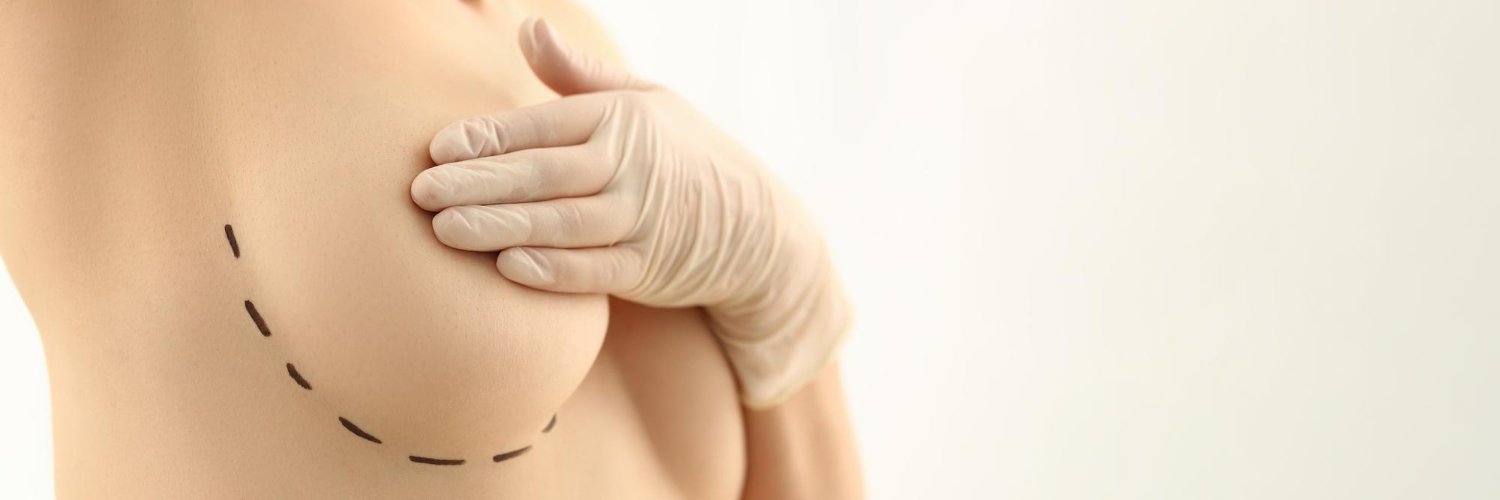
Breast Surgery
Dr. Scot McKenna provides expert breast reconstruction, lifts, augmentations, and reductions using advanced techniques for natural, confident results.
Breast surgery is a deeply personal decision, and you deserve the most experienced and trusted hands for your care. Whether you're exploring reconstructive options after cancer or seeking a cosmetic enhancement, Dr. Scot McKenna brings over 20 years of precision, compassion, and expertise to every procedure.
Since 1999, Dr. McKenna has performed advanced breast surgeries in his solo practice, offering:
If you’re ready to feel confident and comfortable in your body, schedule your appointment today.
FAQs on Breast Reconstruction

-
Breast reconstruction is a surgical procedure designed to restore one or both breasts to a more standard shape, appearance, symmetry, or size following a breast cancer mastectomy, lumpectomy, or other trauma. Breast reconstruction often involves several procedures performed in stages, and can either begin at the time of your mastectomy or be delayed until a later date.
-
There are a number of different options for implants that may be used during your breast reconstruction:
● Saline implants, which are filled with varying amounts of sterile salt water to affect the shape and feel of your breast. Saline implants are a safe option which will be absorbed naturally and expelled by your body should they ever leak.
● Silicone implants are filled with an elastic gel which feels a great deal like natural breast tissue. However, these implants will need regular monitoring by your plastic surgeon, as the gel may not collapse and can pose risks to your health should they ever leak
You also have several options regarding the shape of your implants, including:
● Form stable implants, which mimic the natural shape of the breast and are shaped like a teardrop. They are thicker at the bottom and tapered towards the top. They are usually filled with a cohesive gel.
● Round implants, which have a tendency to make reconstructed breasts appear fuller than form stable implants. They also often will make the breast project out further away from the body.
Breast implants come in a variety of textures as well:
● Textured breast implants allow the scar tissue to stick to the implant, making them less likely to move around inside of the breast and get repositioned.
● Smooth breast implants move around freely inside of the breast, which may give more natural movement. These implants also have an increased risk of rippling.
Every patient is an individual, and Dr. McKenna is committed to discussing every option with you to make sure you receive the best breast reconstruction to meet your needs and goals.
-
Saline implants – filled with sterile salt water
Silicone implants – soft gel, natural feel
Form-stable (teardrop) implants
Round implants
Textured vs. smooth implants
-
Following your surgery, gauze or bandages will be applied to your incisions. An elastic bandage or support bra will minimize swelling and support the reconstructed breast. A small, thin tube may be temporarily placed under the skin to drain any excess blood or fluid. Dr. McKenna will give you specific instructions, including how to care for your surgical site and which medications you’ll need to aid healing, reduce your risk of infection, and manage any pain.
FAQs on Breast Lifts
-
Also known as mastopexy, a breast lift raises the breasts by removing excess skin and tightening the surrounding tissue to reshape and support the new breast contour. If your areolas have become uncomfortably enlarged over time, can reduce this as well. A breast lift can rejuvenate your figure with a breast profile that is more youthful and uplifted.
-
A woman's breasts often change over time, sometimes sagging, losing their shape, losing their volume or becoming asymmetrical. These changes and loss of skin elasticity can result from:
● Pregnancy
● Breastfeeding
● Weight fluctuations
● Aging
● Gravity
● Heredity
If you’re unhappy with the condition of your breasts, a breast lift may be the perfect option for you.
-
To keep you comfortable during your procedure, you will be sedated or put under anaesthesia depending on which option is best for your body. Dr. McKenna will then make one of three common incisions:
● Around the areola
● Around the areola and vertically down from the areola to the breast crease
● Around the areola, vertically down from the breast crease and horizontally along the breast crease
After making these incisions, Dr. McKenna will lift and reshape the underlying breast tissue to improve breast contour and firmness. He will also reposition the nipple and areola to a more natural height, and reduce the size of your areolas if necessary using skin at the perimeter. After your breasts are reshaped and excess skin is removed, the remaining skin will be tightened as the incisions are closed.
-
After your breast lift procedure is completed, dressings or bandages will be applied to the incisions. You'll need to wear an elastic bandage or support bra to minimize swelling and support your breasts as they heal. A small, thin tube may be temporarily placed under the skin to drain any excess blood or fluid that may collect.
FAQs on Breast Augmentation
-
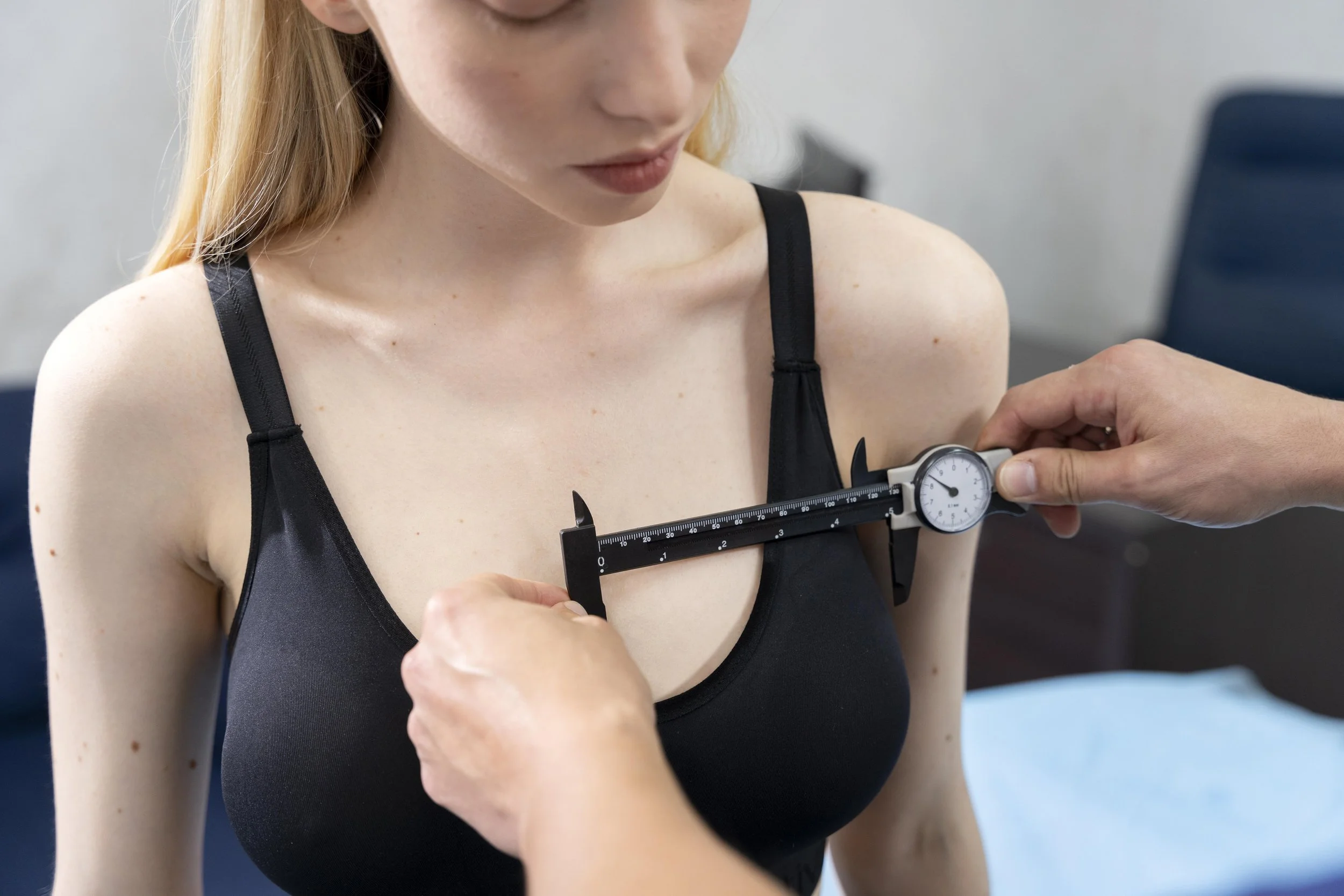
Breast augmentation surgery involves using implants to increase the size of your breasts or restore breast volume that has been lost after weight reduction or pregnancy. Breast augmentation can:
● Increase fullness and projection of your breasts.
● Improve the balance of your figure.
● Enhance your self-image and self-confidence.
Breast augmentation is a very personal procedure and you should do it for yourself, not for someone else. Breast augmentation is a good option if:
● You are bothered by the feeling that your breasts are too small.
● You are dissatisfied with your breasts losing shape and volume after pregnancy, weight loss, or with aging.
● You are unhappy with the upper part of your breast appearing "empty."
● Your breasts are asymmetrical.
● One or both breasts failed to develop normally or have an elongated shape.
-
Breast augmentation does not correct severely drooping breasts. If you want your breasts to look fuller and to be lifted due to sagging, a breast lift may be required in conjunction with breast augmentation. Breast lifting can often be done at the same time as your augmentation or may require a separate operation. If you think you may need a breast lift alongside your augmentation, be sure to discuss your goals with Dr. McKenna during your appointment.
-
As in the case of a breast reconstruction, you have several choices for your implants that affect the shape, texture and contents of your implants, including:
● Saline implants
● Silicone implants
● Form-stable implants
● Round implants
● Textured implants
● Smooth implants
When it comes to breast augmentations, you have an additional option for your implants: fat grafting, which uses liposuction to take fat from other parts of your body and inject it into your breasts. This is an option for women who are looking for a relatively small increase in breast size. While the results from fat grafting may be more natural, they are accompanied by several increased risks, including cysts, infection, death of fat cells, loss of your implants’ shape, and more. If this option is interesting to you, be sure to discuss your risk factors with Dr. McKenna.
-
Your post-surgical recovery period should last between 24 and 48 hours, and you will likely experience soreness and swelling for a few weeks afterward. Be sure to follow all care and cleaning instructions from Dr. McKenna to ensure your breasts heal correctly.
FAQs on Breast Reduction
-
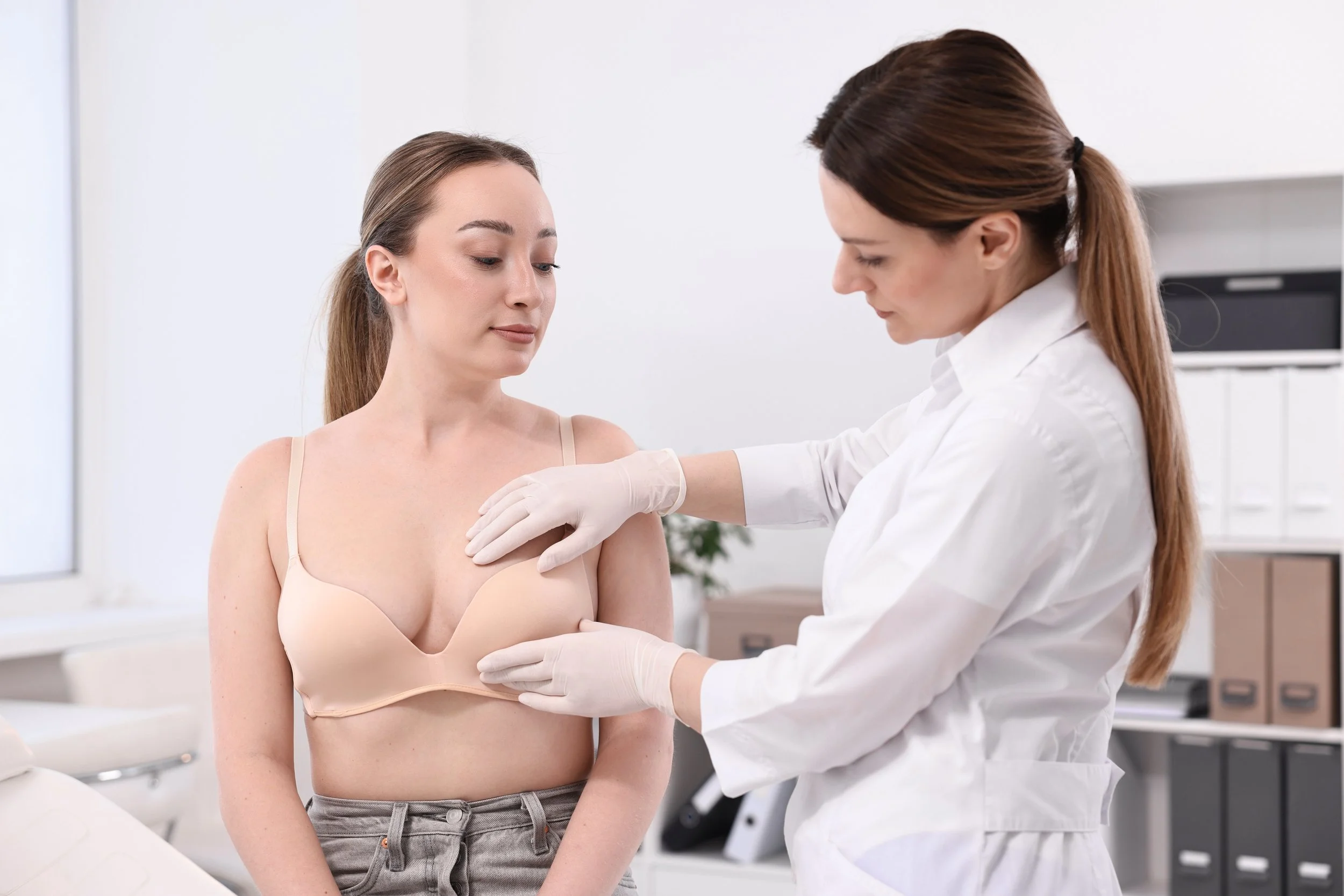
Breast reduction, also known as reduction mammaplasty, is a procedure to remove excess breast fat, glandular tissue, and skin to achieve a smaller breast size.
-
As with all other breast surgeries, you will be sedated and/or anaesthetized for your comfort during your procedure. Dr. McKenna will then make one of two incisions:
● A keyhole or racquet-shaped pattern
● An inverted T or anchor-shaped incision pattern
After the incision is made, your nipple will be repositioned, the diameter of your areola may be reduced, underlying breast tissue will be reduced, and the remaining breast tissue will be lifted and reshaped. The incisions will then be brought together to reshape the smaller breast.
-
To keep you comfortable during your procedure, you will be sedated or put under anaesthesia depending on which option is best for your body. Dr. McKenna will then make one of three common incisions:
● Around the areola
● Around the areola and vertically down from the areola to the breast crease
● Around the areola, vertically down from the breast crease and horizontally along the breast crease
After making these incisions, Dr. McKenna will lift and reshape the underlying breast tissue to improve breast contour and firmness. He will also reposition the nipple and areola to a more natural height, and reduce the size of your areolas if necessary using skin at the perimeter. After your breasts are reshaped and excess skin is removed, the remaining skin will be tightened as the incisions are closed.
-
Dr. McKenna will give you specific instructions on the care of your incisions. If you experience shortness of breath, chest pains, or unusual heart beats, seek medical attention immediately. It’s important to note that Incision lines are permanent, but in most cases will fade over time and can be easily concealed beneath a bra.

Ready to Schedule Your Breast Surgery?
Make an appointment with Dr. McKenna today.